 Week 5: Assignment B: Going to School
This week’s assignment was to watch the documentary “Going
to School”. It was connected to the
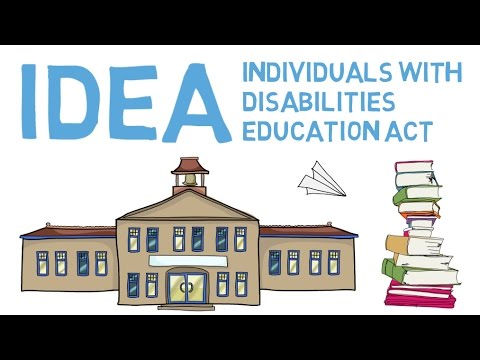
Individuals with Disabilities Education Act (IDEA) which was originally passed
in 1975. It has since been updated to include a few other components and that
was done in 2004. AS I began to watch the documentary, I found that I was not
fully aware of the law and had to do a little more research to learn about what
It covered and how it helps students today. This video I came across (https://youtu.be/3XMndYNEGFA) is a very short video that highlights the main components of the law
and how it affects all students with special needs, today. At the end of “Going
to School” the video highlights the fact that many parents of students with
special needs do not know their right, which ends up leading to situations that
negatively affect their children. This made me think a lot about DelSesto and
the ways in which I.E.P.s are handled at the school. The school district in the
documentary is not much different from DelSesto, especially when it highlighted
the fact that many parents are not native speakers and are unaware of the
processes of an I.E.P. Richard Martinez’s mom, from the documentary, took it
upon herself to be her child’s advocate and did things such as quit work to
volunteer to be her child’s aid. From there, she began to help other parents
around the community facing a similar situation as hers. What if there isn’t a
parent at a school district like her? Who do the parents of students with
special needs go to at DelSesto? Why are there not more programs to help inform
parents of what the I.E.P. process is? These are just some questions I was
trying to better understand throughout the video and they only left me
frustrated.
 Another thing the video showed that bothered me were some of
the comments that were made by a few able-bodied individuals in the documentary.
One was by a student in the same classroom as one of the highlighted students
with special needs and he said something along the lines of “Otherwise we’d
just be disgusted by their sight and it’s not right when people do that” in
regard to how he felt about integrated classrooms. While I do think that the
goal of that student was to highlight how important it was to have integrated
classrooms, I thought the way in which he expressed that was inappropriate and
almost a little rude. Who’s to say anyone would be disgusted? Guess that just
rubbed me the wrong way. I did notice however, that there was a push to show
the benefits of an integrated classroom using the context of socialization.
While socialization for any child is important, why were they not discussing
the educational factor more? The individuals who continued to push the concept
that students should be integrated were the parents of the students with special
needs. What can we do as a society to make integration more about the learning
than just about the socialization?
Another thing the video showed that bothered me were some of
the comments that were made by a few able-bodied individuals in the documentary.
One was by a student in the same classroom as one of the highlighted students
with special needs and he said something along the lines of “Otherwise we’d
just be disgusted by their sight and it’s not right when people do that” in
regard to how he felt about integrated classrooms. While I do think that the
goal of that student was to highlight how important it was to have integrated
classrooms, I thought the way in which he expressed that was inappropriate and
almost a little rude. Who’s to say anyone would be disgusted? Guess that just
rubbed me the wrong way. I did notice however, that there was a push to show
the benefits of an integrated classroom using the context of socialization.
While socialization for any child is important, why were they not discussing
the educational factor more? The individuals who continued to push the concept
that students should be integrated were the parents of the students with special
needs. What can we do as a society to make integration more about the learning
than just about the socialization?


So this is the key debate in the dicussion around inclusion -- the social and the academic. There is a lot of research to suggest that both benefits are accomplished with inclusion and that both typical kids and kids with disabilities benefit in both ways. But there is a lot of factors to consider here. Check out Maria's blog for more on why inclusion isn't always the answer -- very compelling!
ReplyDelete